




Introduction
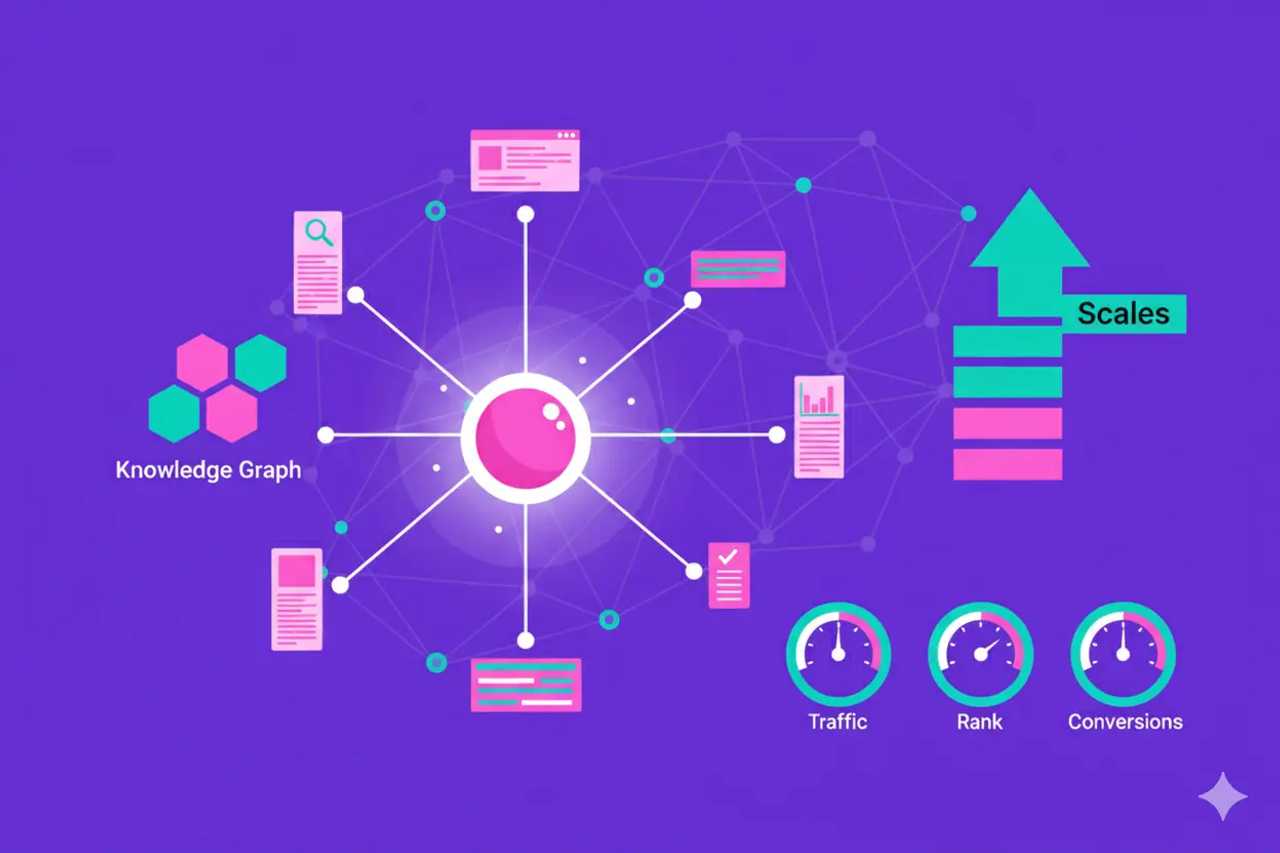
You publish helpful content yet traffic stalls. Your pages answer questions but miss the meaning behind them. Search engines and AI assistants read entities, relationships, and intent. When your site does not model these, you lose visibility in search and in AI Overviews. In this guide you learn a practical way to design an entity led strategy that improves rankings, grows AI citations, and builds trust. You get a clear process, ready to use schema, and a way to measure impact with semantic KPIs. This matters for any business that wants sustainable growth and lower cost per visit. You will ship a topical map, connect it with internal links, and support it with clean JSON LD. You will also learn how to target answer engines with brief, citation ready sections and accurate facts.
What is semantic SEO
Semantic SEO means you optimize for meaning and context. You focus on entities and the relationships between them. You structure pages so search engines understand what each page is about, how it connects to other pages, and which questions it answers. This is different from stuffing keywords. It is a content and information architecture practice.
You care because modern search uses natural language models and a knowledge graph. When your content maps to that graph you earn rich results and citations in answer engines. Read Google’s overview of structured data for a baseline understanding (https://developers.google.com/search/docs/appearance/structured-data/intro-structured-data). See our deep dive in the cluster guide on Entities and Knowledge Graphs at /cluster/entities-knowledge-graphs.
How search understands meaning: entities and graphs
An entity is a person, place, thing, or idea. The same entity can have many names. Your job is to make the reference clear and consistent.
- Name the entity the same way across your site and off site.
- Use schema to declare the entity and link to authoritative profiles with sameAs.
- Describe relationships between entities in simple words on the page.
- Support the description with internal links to relevant hub and spoke pages.
- Keep facts current so AI systems can quote you safely.
You can explore Google’s Knowledge Graph Search API to see how entities resolve in public data (https://developers.google.com/knowledge-graph). You can also review schema.org to find common types to describe your content (https://schema.org).
Build a topical map and clusters
A topical map shows the subjects you cover and how they connect. You use it to plan pages and internal links. Start with an entity audit and move to a map.
- List core entities for your business and audience.
- Group related intents under each entity.
- Turn each group into a cluster with a hub page and spokes.
- Define the purpose and query intent for each page.
- Assign owners and review dates so the map stays fresh.
Place the map inside your content model. The hub becomes the canonical resource. Spokes answer narrow questions, show steps, or explore subtopics. Link spokes to the hub and to each other where it helps a reader. Learn more in our Topic Clusters guide at /cluster/topic-clusters and our Keyword Clustering guide at /cluster/keyword-clustering.
Semantic keyword research and clustering
Classic keyword lists miss intent and context. Cluster keywords into groups that answer the same job to be done.
- Pull seed terms from customer interviews, Search Console, and support tickets.
- Expand with a keyword tool and filter by intent and difficulty.
- Use a clustering tool to group terms by similarity and searcher goal.
- Name each cluster with a clear topic phrase that includes the primary keyword.
- Map each cluster to one page and avoid duplicates.
Add related terms that clarify meaning. Use synonyms, common entities, and question variants. Avoid the old idea of LSI keywords. It does not reflect how modern systems work. You can cite Search Console for coverage and see impressions rise as you expand context.
Structured data and schema you can trust
Clean JSON LD helps search engines understand your entities and page purpose. Use a small set of types and keep fields accurate. Below is a safe starter for a pillar article.
{
  "@context": "https://schema.org",
  "@type": "Article",
  "mainEntityOfPage": {
    "@type": "WebPage",
    "@id": "https://aiso-hub.com/blog/semantic-seo"
  },
  "headline": "Semantic SEO that Scales: Entity Led Strategy and KPIs",
  "description": "An entity first framework for semantic SEO with topic maps, schema, internal links, and KPIs.",
  "author": {
    "@type": "Person",
    "name": "AISO Hub Editorial"
  },
  "publisher": {
    "@type": "Organization",
    "name": "AISO Hub",
    "logo": {
      "@type": "ImageObject",
      "url": "https://aiso-hub.com/logo.png"
    }
  },
  "datePublished": "2025-11-10",
  "dateModified": "2025-11-10"
}
Add FAQPage on the same URL when you publish the FAQ. Use BreadcrumbList on all pages. Use Organization and Person on the site wide template. Read Google’s guide for structured data policies (https://developers.google.com/search/docs/appearance/structured-data/policies).
Internal linking and information architecture
Internal links turn your topical map into a graph. Use a simple pattern.
- Link every spoke to the hub and back to the spoke from the hub.
- Add related links between sibling spokes where helpful.
- Use descriptive anchors that match the topic phrase.
- Place links high on the page for crawl and user value.
- Keep a list of orphan pages and link them or remove them.
Support the pattern with breadcrumbs. Use BreadcrumbList in schema and visible breadcrumbs in the template. Explain the context in the first paragraph so answer engines can cite the hub with confidence. You can find our internal linking playbook in the cluster page at /cluster/internal-linking-strategy.
Optimize for AI Overviews and answer engines
Answer engines look for short, accurate, and well structured content. They quote sources that reduce risk and resolve ambiguity.
- Start sections with a concise answer in one or two sentences.
- Follow with steps, data points, and examples that support the answer.
- Use plain language and define terms the first time you use them.
- Add citations to credible sources when you state facts.
- Keep facts current and dates clear.
Write summary blocks with a unique voice and proof. Mark them up with Article and FAQ when it fits. Avoid claims you cannot verify. Add specific examples and numbers that your team can support. When you see your brand cited in AI answers, log it and measure share of voice. We explain this in the LLM Optimization guide at /cluster/llm-seo and the AIO guide at /cluster/ai-overviews-optimization.
LLM optimization and AI visibility
Large language models build answers from many sources. You raise your chance of citation when your content is easy to quote and verify.
- Keep facts stable and place them in predictable blocks.
- Use consistent names for entities and link to verified profiles.
- Offer summary answers that fit in a short quote.
- Publish glossaries and definitions that disambiguate terms.
- Use a clean HTML structure and readable code blocks.
Track AI visibility. Record where your brand appears in AI answers. Track the accuracy of the mention and the link that appears. Create a weekly review. Fix wrong facts on your site. Publish a correction note on the page so models find the right data on the next crawl.
Multilingual and local semantic SEO for Portugal
If you serve Portugal, write for European Portuguese. Keep entity names consistent across languages. Use hreflang between Portuguese and English pages. Localize Organization, LocalBusiness, and Person schema fields in JSON LD.
Use the same topical map across languages. Build the Portuguese version with local examples and citations. Align NAP details with major directories. Maintain a Portuguese author page with clear credentials. See our guide at /cluster/multilingual-seo-portugal.
Measurement and semantic KPIs
You need proof that this work drives value. Set up a dashboard that tracks both classic and semantic signals.
- Entity coverage. Count topics and subtopics covered by the map.
- AI citation share. Track the rate of branded citations in answer engines.
- Rich results. Watch impressions and clicks for articles that carry schema.
- Hub health. Measure internal link depth and orphan rate.
- Topical depth. Review word count, examples, and source citations by page.
- Freshness. Check update dates and set review cadences for top pages.
- Business impact. Map organic sessions to sales qualified pipeline.
Use Search Console for query data and index health. Use your analytics tool for behavior and conversions. Use a content graph or a simple spreadsheet to manage entities and clusters. If you run a graph database like Neo4j, store page nodes and link edges to audit coverage.
Tools and workflows
You can run this with common tools.
- Research and clustering. Ahrefs or Semrush for data, a clustering tool for groups.
- Mapping. A mind map tool or a spreadsheet for the first version.
- Authoring. Markdown or a headless CMS for clean output.
- Schema. JSON LD templates in your CMS and a validator.
- Measurement. Search Console, analytics, and a small database for KPIs.
Use version control for content models and templates. Keep a change log. Set ownership for each hub and spoke. Add a quarterly review of the map to catch drift.
How AISO Hub can help
You can build this yourself with time and focus. If you want speed and a partner who has done this in Portugal and beyond, we can help.
AISO Audit finds entity gaps, missing schema, and link issues. You get a clear fix list and a fast win plan.
AISO Foundation builds your topical map, content model, and JSON LD templates. You leave with a working blueprint and the first set of hubs and spokes.
AISO Optimize improves your existing content. We expand clusters, fix internal links, and add summary blocks that answer engines can quote with confidence.
AISO Monitor tracks semantic KPIs, AI citations, and freshness. You see what to fix each month and where to invest next.
Talk to us at https://aiso-hub.com. We can start with a short audit and a plan you can share with your team.
Conclusion
Semantic SEO helps you compete in a world where search and AI care about meaning. You now have a plan to build an entity led site. You will map topics, cluster keywords, add clean schema, and connect pages with strong internal links. You will publish concise answers and proof. You will track the right KPIs and keep your graph fresh. This is not theory. It is repeatable work that your team can run. Start with an entity audit and a small cluster. Ship one hub with three spokes. Add schema and links. Watch coverage, rich results, and AI citations. Then scale with a monthly cadence and a dashboard you trust.